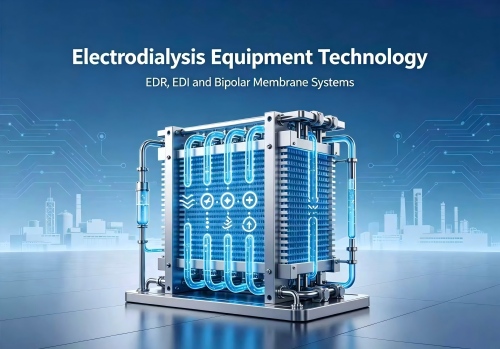
Within the industrial water treatment technology system, electrodialysis (ED) has long been a membrane separation process with high technical barriers. Unlike reverse osmosis technology driven by pressure, electrodialysis uses a direct current electric field as the driving force, causing anions and...
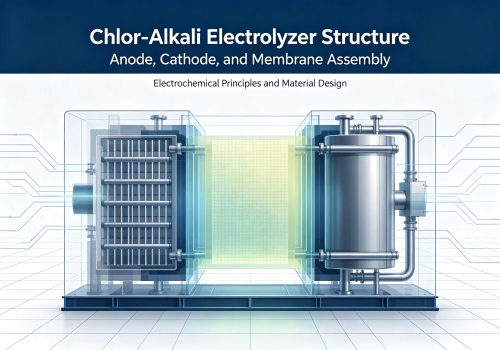
The essence of a chlor-alkali electrolyzer is a precisely controlled electrochemical reactor. Direct current flows in through the anode and out through the cathode. Within an extremely narrow gap, brine is decomposed into chlorine gas, hydrogen gas, and caustic soda. Driving all of this are three pr...
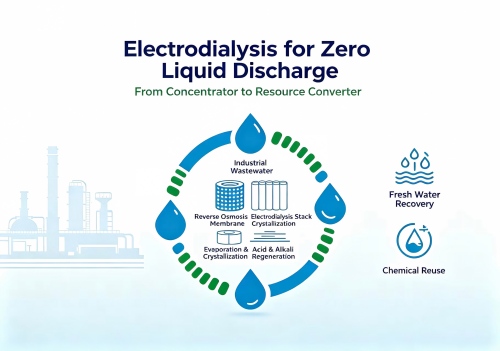
Against the backdrop of increasingly strained global water resources and ever-tightening environmental regulations, Zero Liquid Discharge (ZLD) has become the ultimate goal of industrial wastewater treatment. It means that all water discharged from the system must be recovered and reused, with no li...
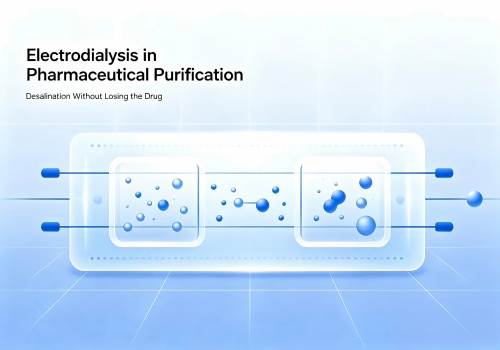
Manufacturing pharmaceuticals is essentially a series of chemical reactions. Take a typical antibiotic synthesis as an example: two raw materials react in a solvent to form the target molecule. However, when the reaction is complete, the vessel contains not only the target product but also a large a...
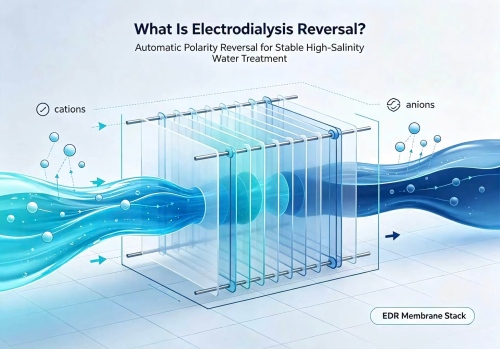
Electrodialysis technology has undergone decades of development, forming a technological family centered on conventional electrodialysis (ED), inverted electrode electrodialysis (EDR), and bipolar membrane electrodialysis (BPED). While all three share the physicochemical basis of selective ion migra...
Against the backdrop of global energy transition, hydrogen energy is experiencing unprecedented development opportunities. From policy to capital markets, "green hydrogen" has become a frequently used buzzword. In the hydrogen production technology race, besides the well-known alkaline water electro...