Introduction: The key to modern chlor-alkali production is not simply “electrifying brine.” It is the controlled combination of ion-selective membranes, electrode reactions and high-purity brine that enables chlorine, hydrogen and caustic soda to be produced reliably within one electroly...
Caustic soda (NaOH, sodium hydroxide) is an essential basic chemical for industries including papermaking, alumina, textiles, chemicals, water treatment, and cleaning. In modern industry, large-scale caustic soda is not produced by simple chemical neutralization; instead, it relies on the chlor-alka...
The chlor-alkali process is one of the most important electrochemical production routes in basic chemicals. Its core task is to use refined brine as feedstock and simultaneously obtain chlorine, hydrogen and caustic soda (sodium hydroxide) through electrolysis. It is called “chlor-alkali&rdquo...
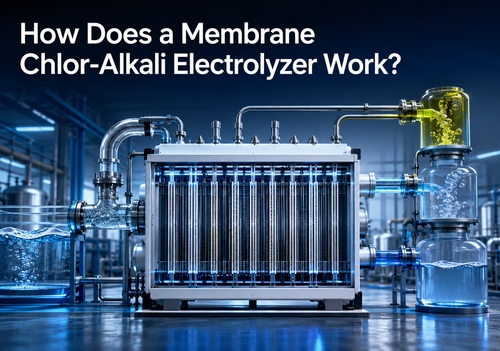
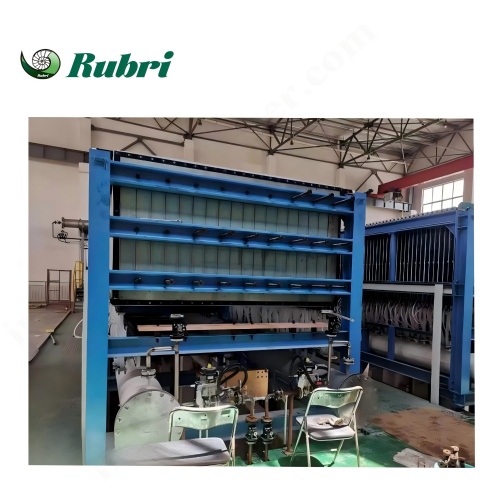
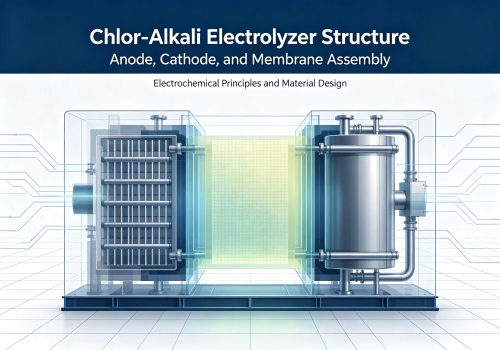
The essence of a chlor-alkali electrolyzer is a precisely controlled electrochemical reactor. Direct current flows in through the anode and out through the cathode. Within an extremely narrow gap, brine is decomposed into chlorine gas, hydrogen gas, and caustic soda. Driving all of this are three pr...
In chlor-alkali chemical production, Ca2+ and Mg2+ are the two most common and most harmful cationic impurities. Excessive calcium and magnesium ions enter the electrolyzer along with the refined brine and migrate toward the cathode under the electric field. They penetrate the carboxylic acid layer...
In today’s market, if you're looking for a reliable Electrolytic Chlorine Generator supplier, you're definitely gonna want to do your homework. Plenty of companies out there claim they’ve got the best solutions, but let's be honest — not all of them actually meet high standards whe...