1. Why Can BMED Turn Salt Back into Acid and Alkali?
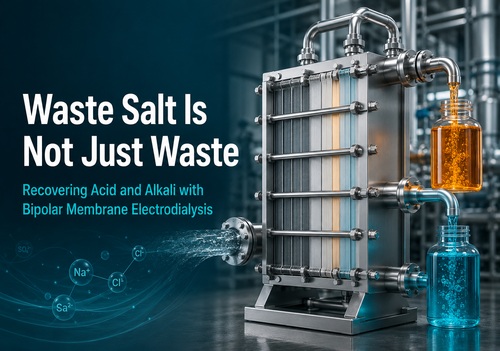
In many chemical, metallurgical, electronics, advanced-material, and wastewater-treatment projects, the final stream is not simply high-salinity water. It is a concentrate containing potentially usable salts, such as chlorides, sulfates, an...
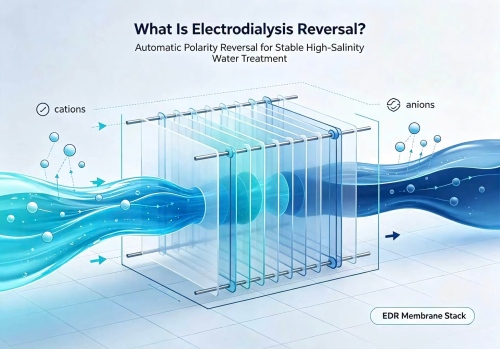
In industrial desalination and high-salinity wastewater treatment, many projects are not really about “whether desalination is possible,” but about whether the equipment can operate stably over the long term. Traditional electrodialysis uses a direct current electric field to drive catio...
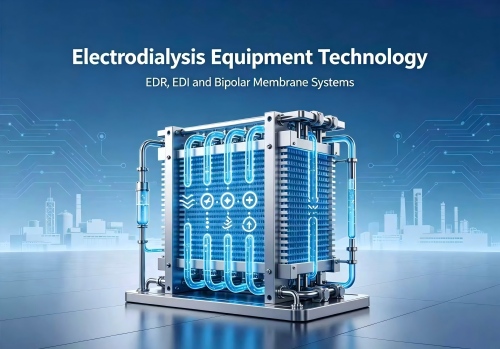
Within the industrial water treatment technology system, electrodialysis (ED) has long been a membrane separation process with high technical barriers. Unlike reverse osmosis technology driven by pressure, electrodialysis uses a direct current electric field as the driving force, causing anions and...
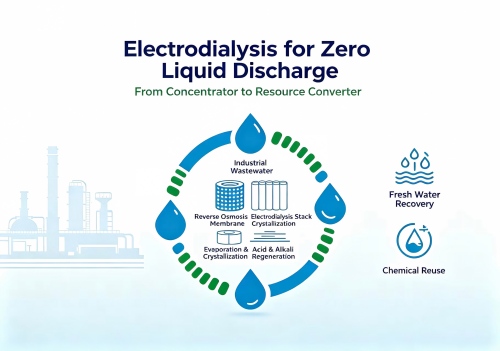
Against the backdrop of increasingly strained global water resources and ever-tightening environmental regulations, Zero Liquid Discharge (ZLD) has become the ultimate goal of industrial wastewater treatment. It means that all water discharged from the system must be recovered and reused, with no li...
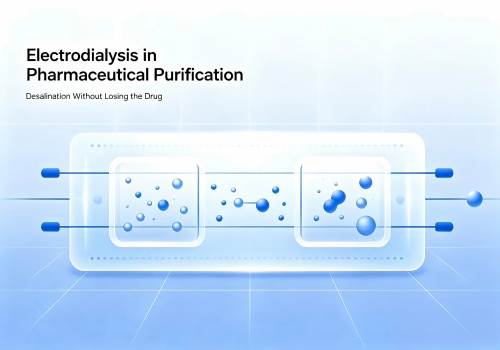
Manufacturing pharmaceuticals is essentially a series of chemical reactions. Take a typical antibiotic synthesis as an example: two raw materials react in a solvent to form the target molecule. However, when the reaction is complete, the vessel contains not only the target product but also a large a...