1. Why Can BMED Turn Salt Back into Acid and Alkali?
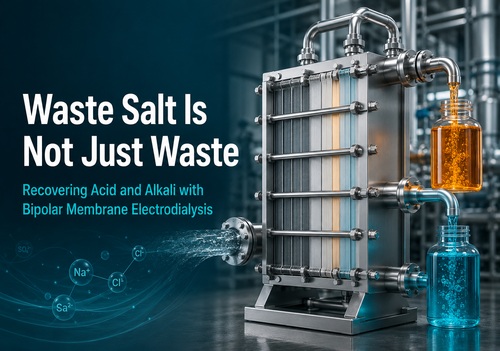
In many chemical, metallurgical, electronics, advanced-material, and wastewater-treatment projects, the final stream is not simply high-salinity water. It is a concentrate containing potentially usable salts, such as chlorides, sulfates, an...
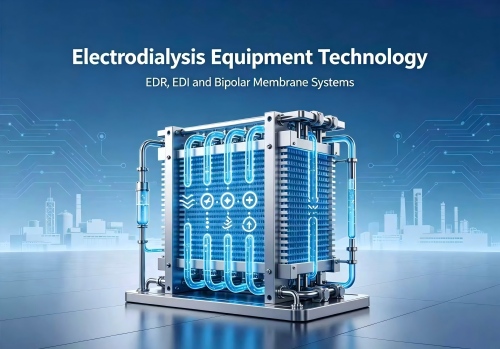
Within the industrial water treatment technology system, electrodialysis (ED) has long been a membrane separation process with high technical barriers. Unlike reverse osmosis technology driven by pressure, electrodialysis uses a direct current electric field as the driving force, causing anions and...
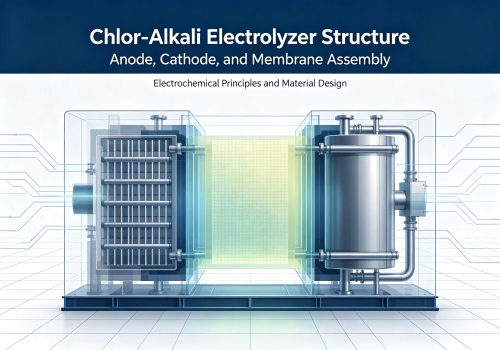
The essence of a chlor-alkali electrolyzer is a precisely controlled electrochemical reactor. Direct current flows in through the anode and out through the cathode. Within an extremely narrow gap, brine is decomposed into chlorine gas, hydrogen gas, and caustic soda. Driving all of this are three pr...
Manufacturing pharmaceuticals is essentially a series of chemical reactions. Take a typical antibiotic synthesis as an example: two raw materials react in a solvent to form the target molecule. However, when the reaction is complete, the vessel contains not only the target product but also a large a...