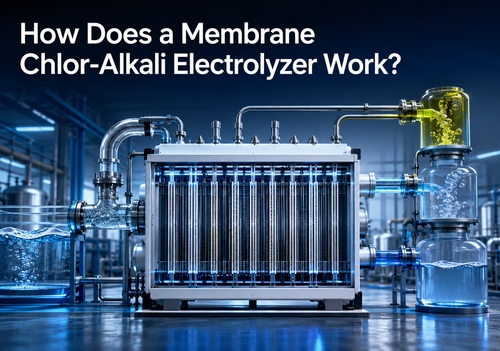
Introduction: The key to modern chlor-alkali production is not simply “electrifying brine.” It is the controlled combination of ion-selective membranes, electrode reactions and high-purity brine that enables chlorine, hydrogen and caustic soda to be produced reliably within one electroly...
The chlor-alkali process is one of the most important electrochemical production routes in basic chemicals. Its core task is to use refined brine as feedstock and simultaneously obtain chlorine, hydrogen and caustic soda (sodium hydroxide) through electrolysis. It is called “chlor-alkali&rdquo...
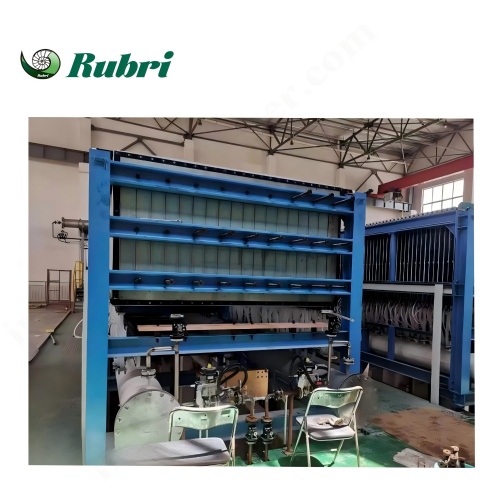
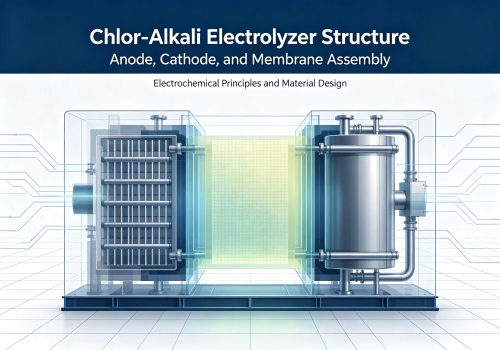
The essence of a chlor-alkali electrolyzer is a precisely controlled electrochemical reactor. Direct current flows in through the anode and out through the cathode. Within an extremely narrow gap, brine is decomposed into chlorine gas, hydrogen gas, and caustic soda. Driving all of this are three pr...