English
 français
 Deutsch
 italiano
 русский
 español
 português
 العربية
 Nederlands
 한국의
한국의 Romania
 Bulgaria
 Melayu
What Are You Looking For?

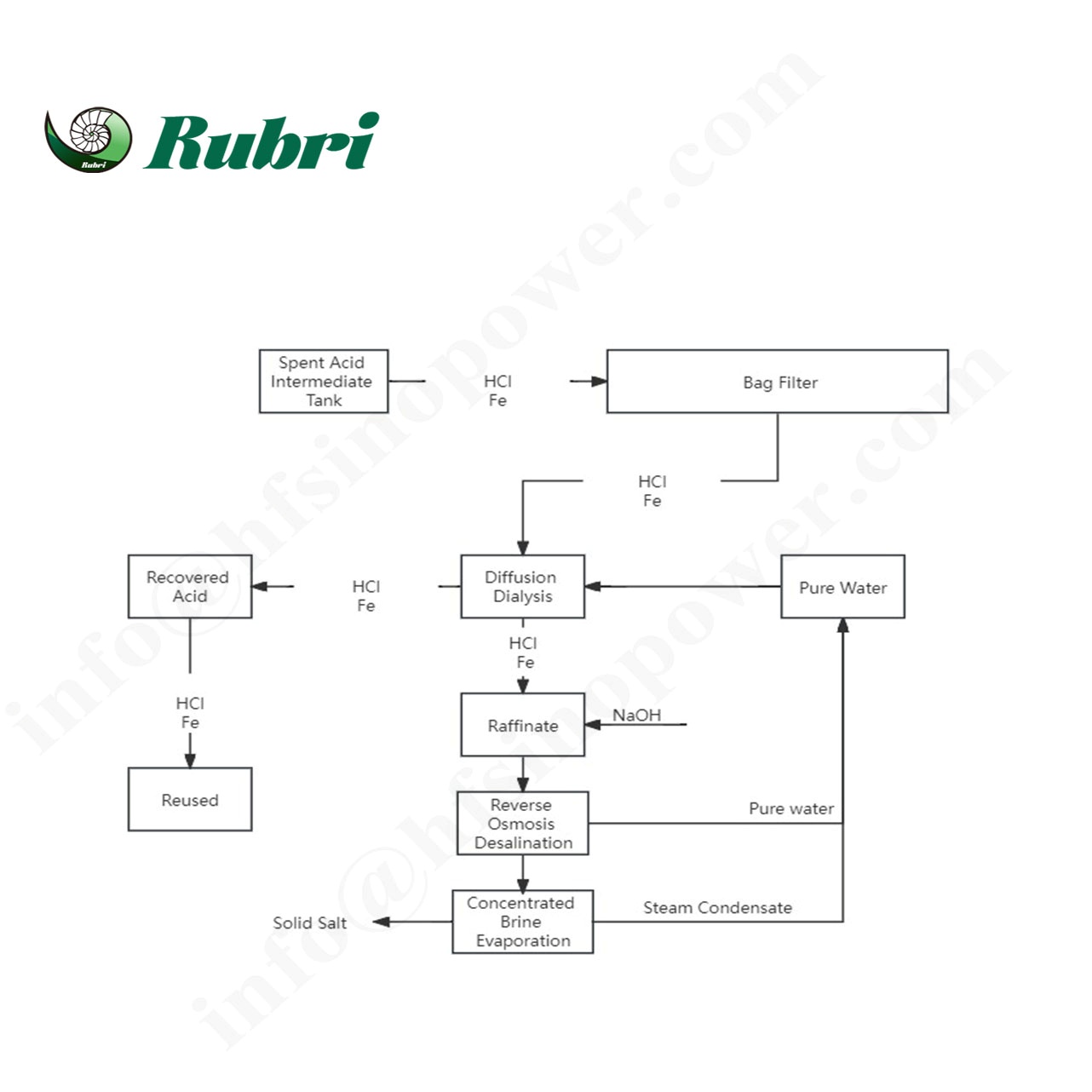
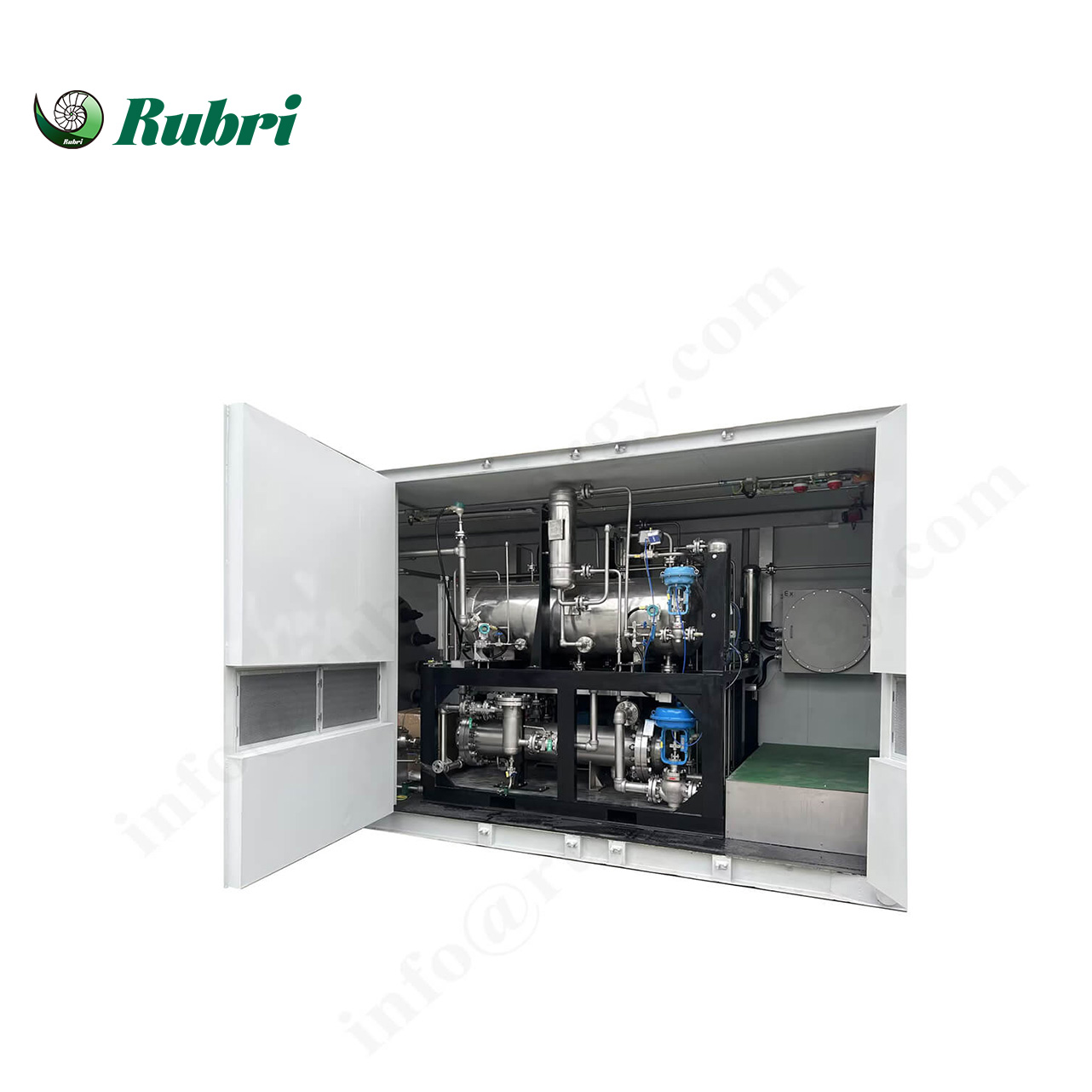
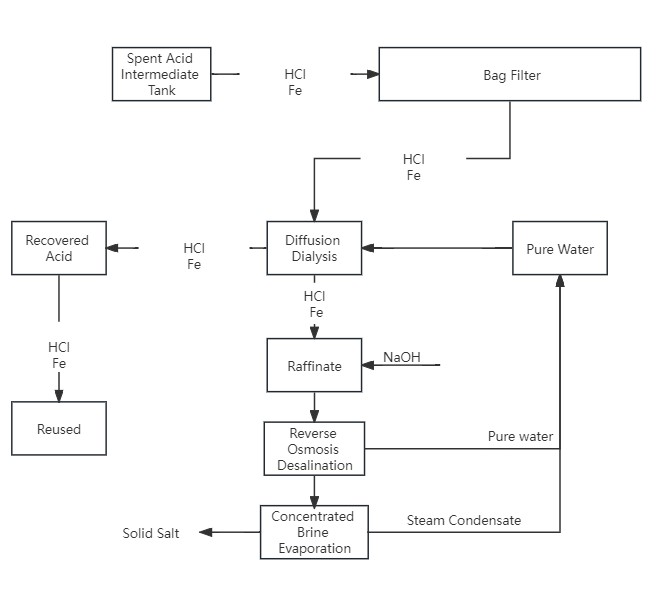
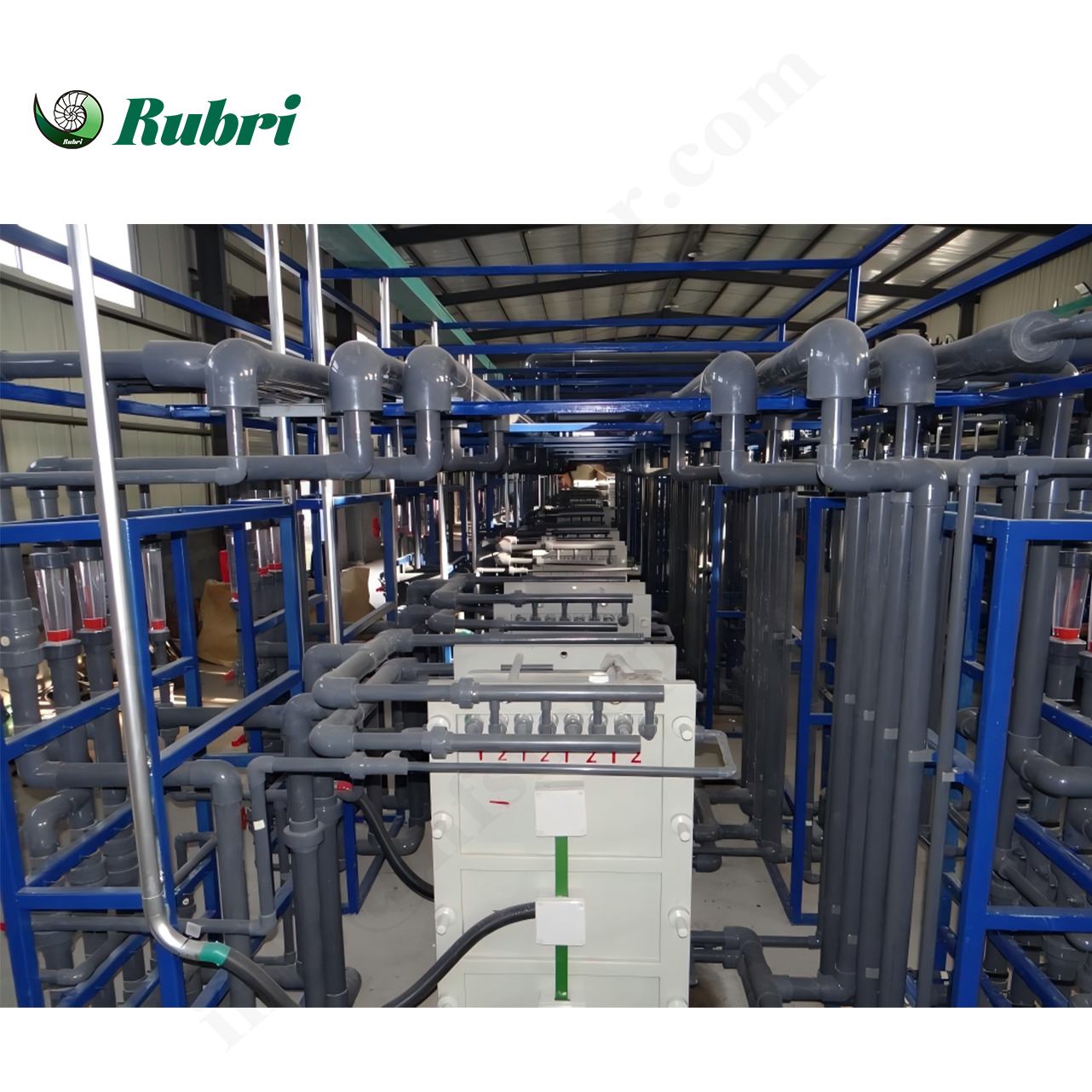
Rubri is proficient in diffusion dialysis technology and is skilled in designing and implementing customized solutions, providing customers with comprehensive green and clean production solutions.
Brand :
RubriProduct Description
Technical advantages
1、The device is designed with flexibility
2、Low energy consumption
3、No environmental pollution
4、Long service life
Application scenarios
1、Recovery of waste acids and bases from the chemical industry
2、Metallurgy / Wet Process Metallurgy Acid Wash Waste Liquid Recycling and Utilization
3、Electroplating / Electronic Industry Wastewater Treatment
4、Pre-treatment of high-saline acidic and alkaline wastewater in the environmental protection field
5、Pharmaceuticals / Food Industry Material Purification
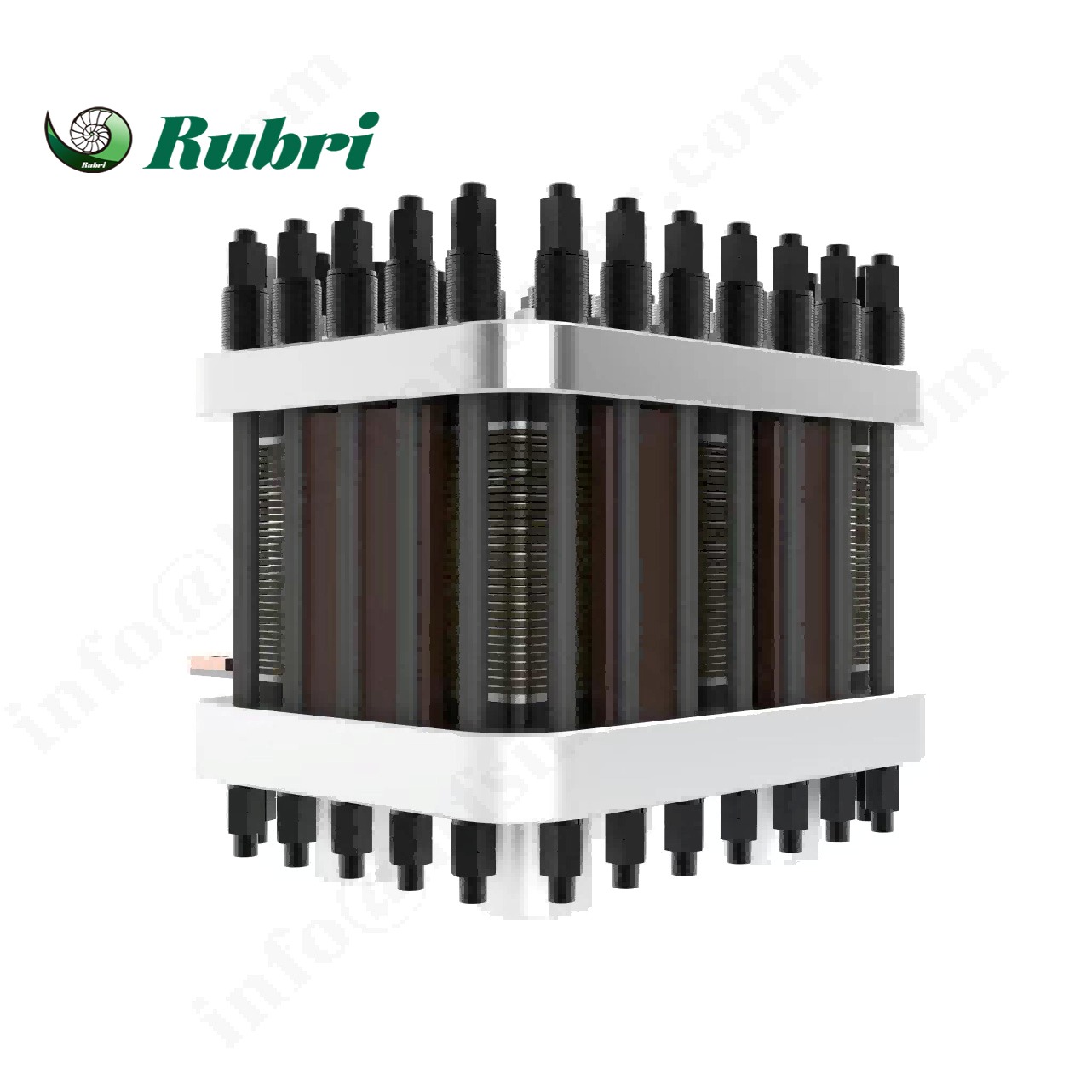
IntroductionBipolar Membrane Electrodialysis (BMED) is an advanced electrochemical separation technology that utilizes a specialized membrane stack to directly convert salts into their corresponding acids and bases. The core component is the bipolar membrane (BPM), which consists of a cation-exchange layer and an anion-exchange layer laminated together. Under the influence of a direct current (DC) electric field, the BPM catalyzes the dissociation of water molecules at its junction, producing H⁺ and OH⁻ ions. These ions migrate through the membrane stack to react with the anions and cations from a salt feed solution, thereby generating acid and base products simultaneously.
Read More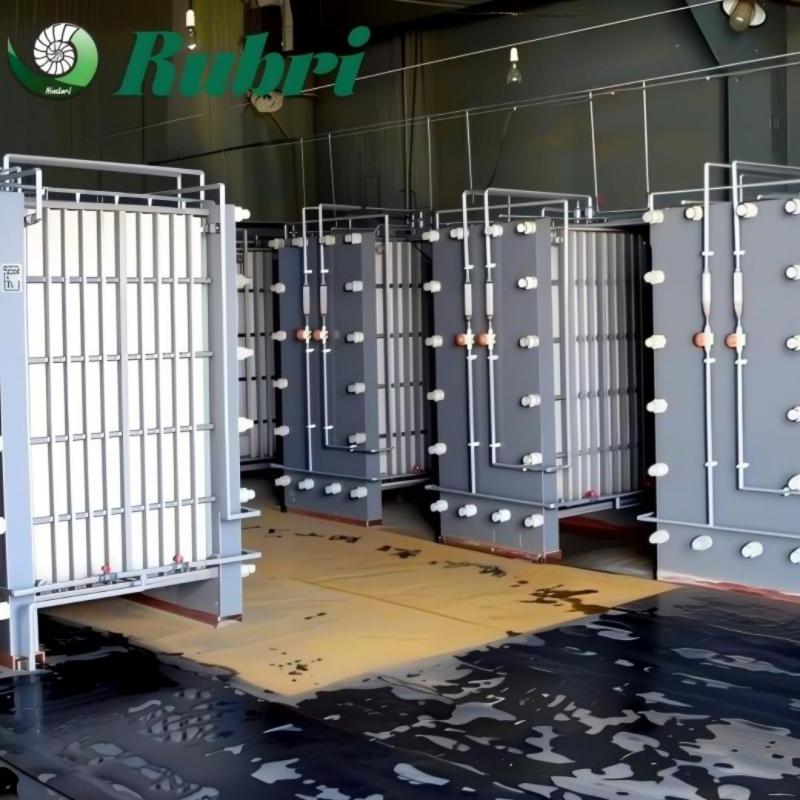
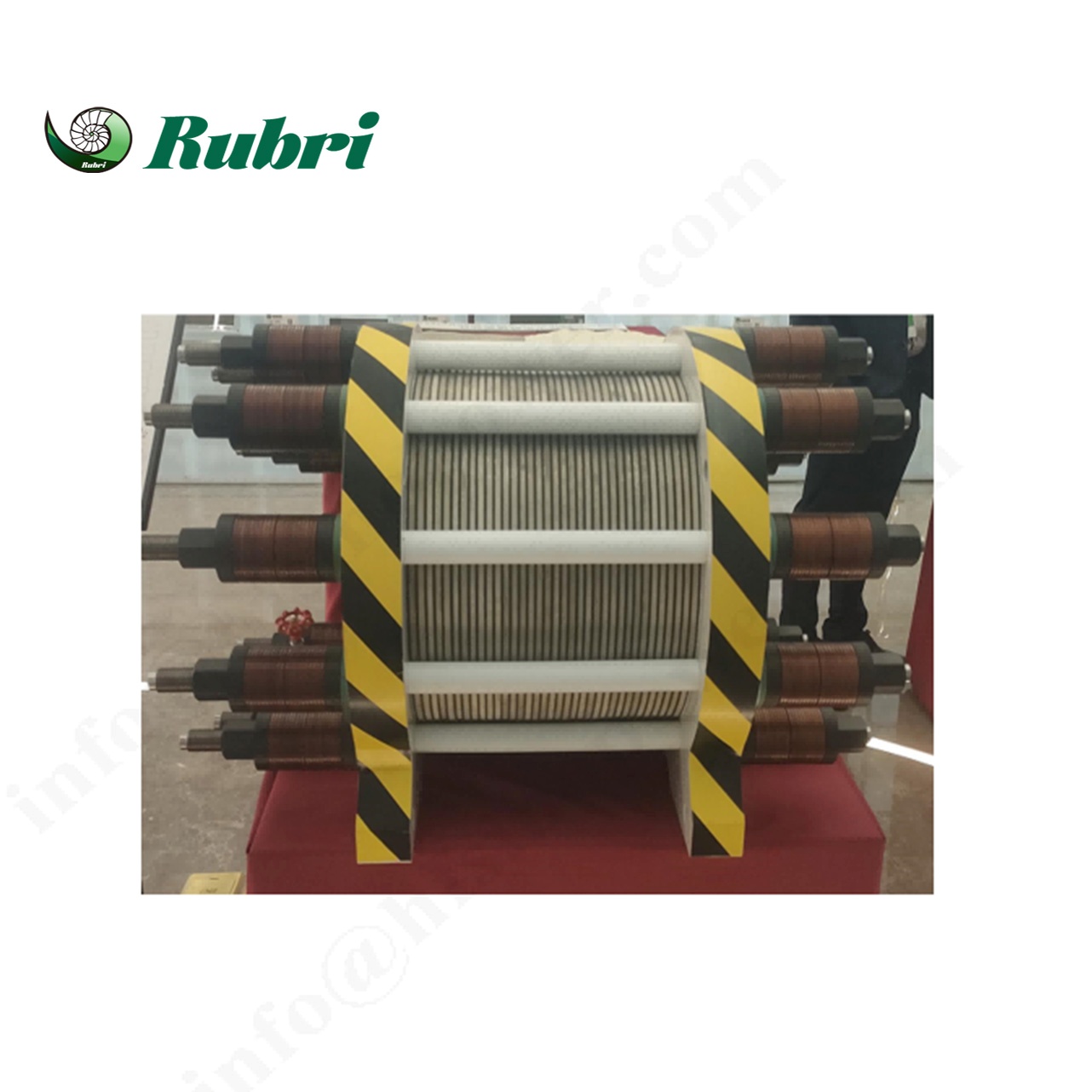
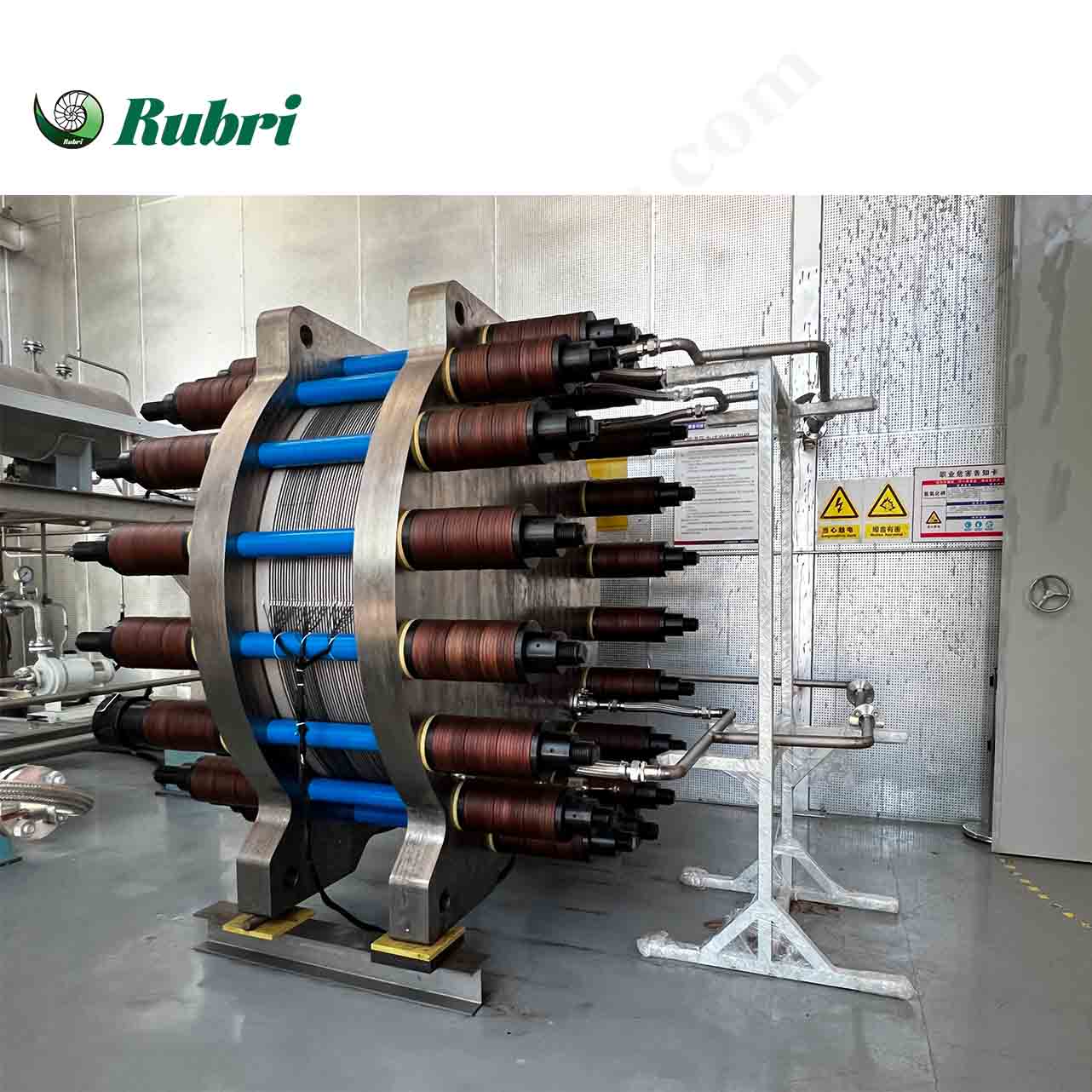
Electrodialyzer is a core ion separation equipment adopting electrodialysis technology. By applying DC electric field and matching anion and cation exchange membranes, it realizes directional migration and separation of ions in liquid. With simple and reliable structure, it is classified into screw-fastened and hydraulic integrated types for different usage scales. Widely applied in seawater desalination, industrial wastewater treatment, food concentration, pharmaceutical purification and new energy electrolyte processing, it efficiently completes solution desalination, concentration and ionic impurity removal.
Read More
Rubri is proficient in diffusion dialysis technology and is skilled in designing and implementing customized solutions, providing customers with comprehensive green and clean production solutions.
Read More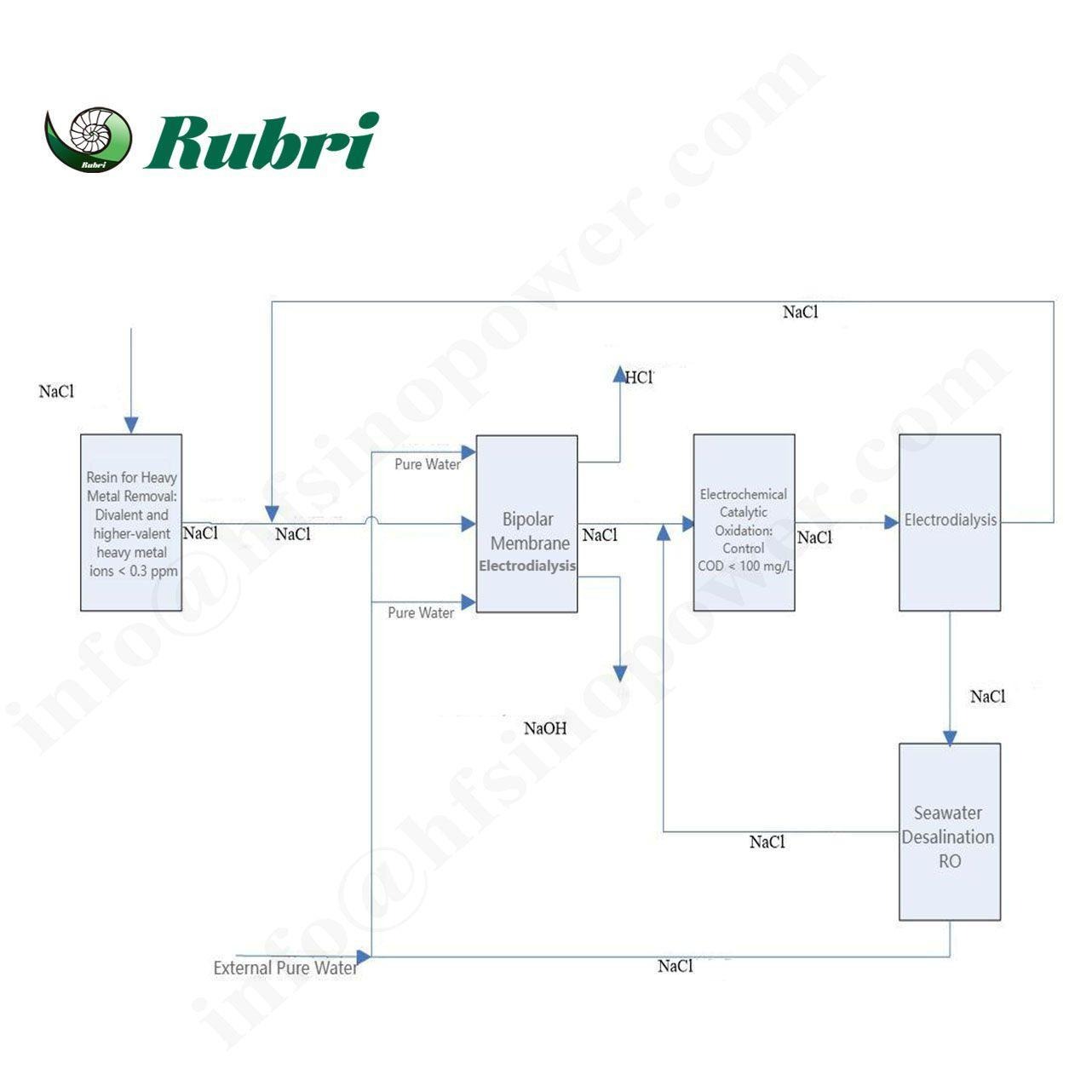
Rubri is proficient in bipolar membrane electrodialysis technology and is skilled in designing and implementing customized solutions, providing customers with comprehensive green and clean production plans.
Read More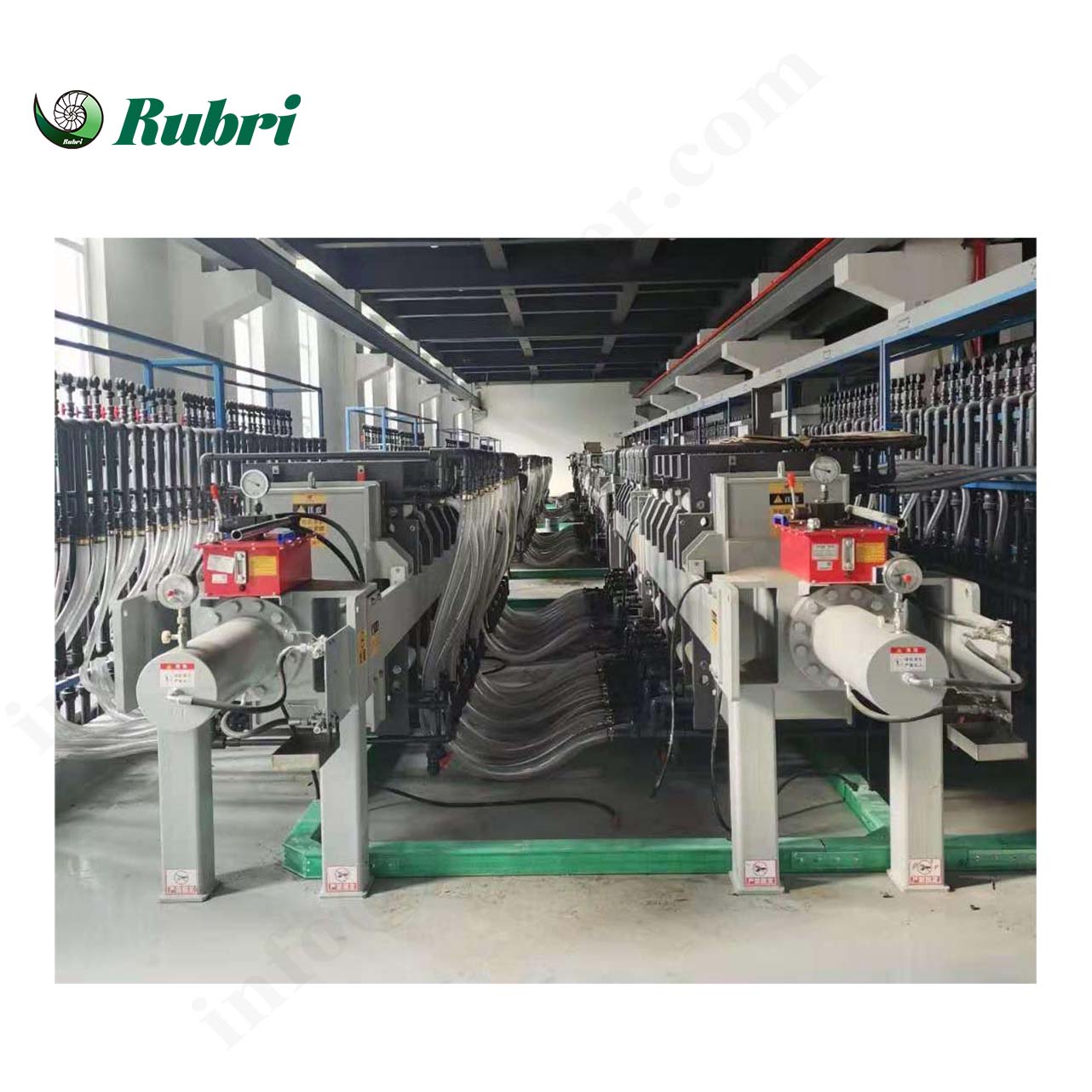
Core Principle of Electrodialysis The core of electrodialysis technology lies in the combination of electric field and selective membrane technology, with the specific principle divided into two parts: 1. Driving effect of DC electric field Under the action of a DC electric field, anions and cations in the solution move directionally: cations migrate toward the negative electrode, while anions migrate toward the positive electrode. 2. Selective sieving effect of ion exchange membranes Two types of ion exchange membranes are used in the system to achieve ion separation: Cation exchange membrane: Only allows cations (e.g., Na+, Ca2+, Mg2+) to pass through, while blocking anions. Anion exchange membrane: Only allows anions (e.g., Cl-, SO42-) to pass through, while blocking cations.
Read More
This technology is based on the principle of bipolar membrane electrodialysis. Under the action of a direct current electric field, it utilizes bipolar membranes to efficiently dissociate water molecules into hydrogen ions and hydroxide ions. This process then directionally converts salts in electroplating wastewater (such as sodium chloride, sodium sulfate, etc.) into corresponding acids (such as hydrochloric acid, sulfuric acid) and alkalis (such as sodium hydroxide), achieving the dual objectives of wastewater purification and resource recovery.
Read More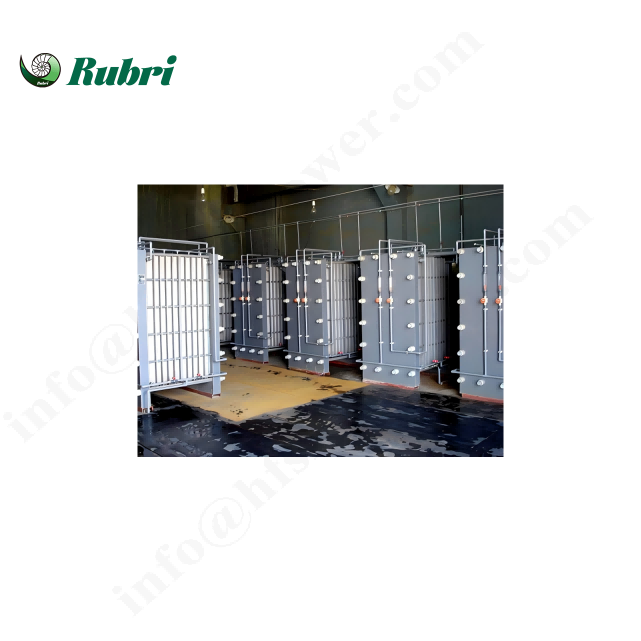
Core Principle of Electrodialysis The core of electrodialysis technology lies in the combination of electric field and selective membrane technology. Its specific principle is divided into two parts: Driving Effect of DC Electric Field and Concentration GradientUnder the action of a DC electric field or concentration gradient, anions and cations in the solution move directionally: cations migrate toward the negative electrode, while anions migrate toward the positive electrode; solutes move from high-concentration solutions to low-concentration ones. Selective Sieving Effect of Ion Exchange MembranesTwo types of ion exchange membranes are used in the system to achieve ion separation: Cation Exchange Membrane: Only allows cations (e.g., Na⁺, Ca²⁺, Mg²⁺) to pass through, while blocking anions. Anion Exchange Membrane: Only allows anions (e.g., Cl⁻, SO₄²⁻) to pass through, while blocking cations.
Read More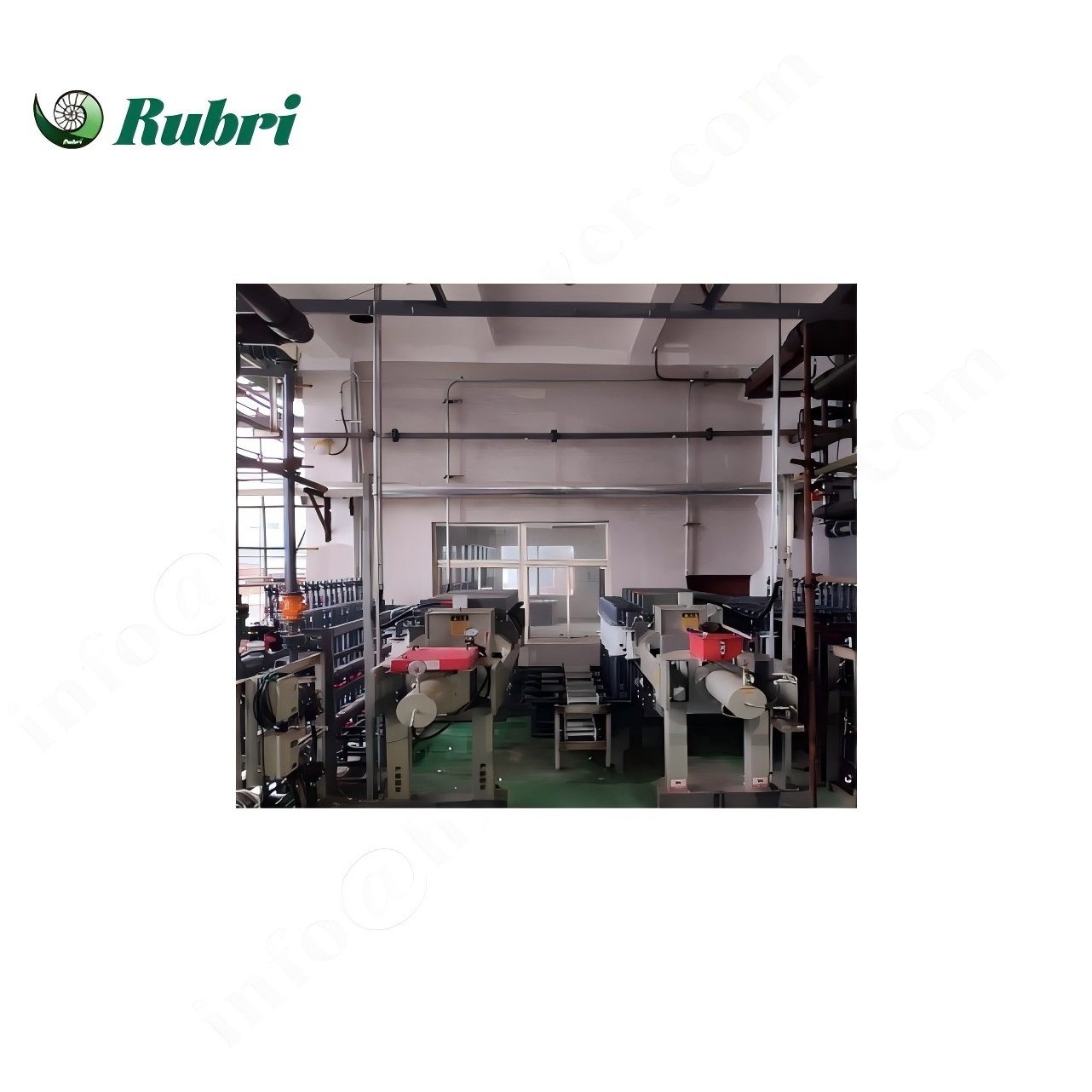
Core Principle of Bipolar Membrane Electrodialysis (BPED) The core of BPED technology lies in the combination of electric field, selective membrane technology, and the unique water-splitting capability of bipolar membranes. 1. Driving Effect of DC Electric FieldUnder a DC electric field, ions migrate directionally: cations move toward the cathode, while anions move toward the anode. 2. Membrane Functions Bipolar Membrane (BPM): Splits water ( H2O ) into H+ and OH− ions under the electric field, providing a source for acid and base production. Cation Exchange Membrane (CEM): Selectively allows cations to pass through. Anion Exchange Membrane (AEM): Selectively allows anions to pass through. By arranging these membranes alternately, salts can be converted into corresponding acids and bases.
Read More


 IPv6 network supported